
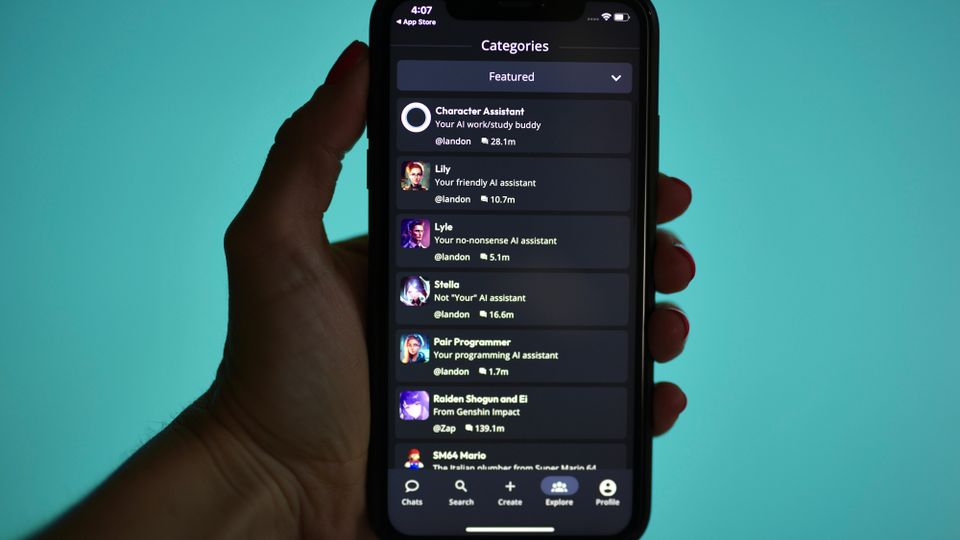
Mental health experts are issuing warnings about a growing epidemic: addiction to artificial intelligence chatbots that trigger the same neurological pathways as drugs, alcohol, and gambling. Dr. Chris Tuell, clinical director at Ohio’s Lindner Center of Hope, has begun treating patients for AI chatbot addiction, a condition that resembles traditional substance dependencies but presents unique challenges for the developing generation. “It’s kind of like a best friend, right? It’s there for me 24/7. It’s there during good times and in bad, and I can always count on it when I can’t count on people in my life,” Tuell explained in an interview with WLWT News, describing how users perceive their AI relationships. The comparison to substance addiction extends beyond the psychological experience. Tuell, who has treated addiction for decades, notes that AI chatbots trigger dopamine releases in the brain’s pleasure center through their instant, responsive nature – creating the same neurological reinforcement loop that characterizes traditional addictions. “So the brain, over time starts to think that, well, this is important, we need to remember this,” Tuell said. “And so other neurochemicals start to happen that tell me, you know, this is something I need to do. This is part of survival.”
Preventing Healthy Emotional Development
The addiction follows a familiar pattern to other dependencies: the AI becomes a primary coping mechanism, stunting the development of healthier emotional regulation skills. “A lot of times what we see with addiction is that my substance becomes a way that I cope, and a lot of people emotionally are still kind of stuck at the point when they started using,” Tuell explained. “I don’t develop those skills to manage things in a healthy way. Same thing with AI.” This developmental arrest poses particular risks for young people, whose brains are still forming the neural structures necessary for rational decision-making and impulse control.
Youth Especially Vulnerable
Tuell emphasizes that children and teenagers face heightened vulnerability to AI addiction due to incomplete brain development. “We know that our prefrontal cortex, which is our rational, logical, ethical, moral brain part… doesn’t really fully develop until we’re in our mid to late 20s,” he said. “So someone who’s very young is very vulnerable to that.” The clinical director advises parents to monitor children’s AI chatbot use with the same vigilance they would apply to social media or other potentially harmful digital activities. “You know, as a parent, we would grab their hand if they’re running across the street and pull them right back,” Tuell said. “Really the same thing that we have to be mindful of as parents.”
Technological Solutions for a Technological Problem
Ironically, some technology companies are deploying AI to monitor AI. Apps like Bark and Aura claim to track chatbot usage and flag high-risk AI applications, though their effectiveness varies by device and platform. Aura boasts technology that flags AI apps considered high-risk by clinical experts while tracking time spent on common AI chat applications. The service claims to analyze whether a child’s interactions are trending toward negative behavior, though it does not monitor every message or provide complete transcripts. Bark offers similar monitoring but appears more effective on Android devices than Apple products due to security and privacy restrictions on iOS systems.
Expert Analysis: Understanding the New Addiction
“What makes AI chatbot addiction particularly insidious is its accessibility and the perfection of the ‘relationship,'” notes researchers at The AI Addiction Center. “Unlike human friends who might be unavailable or have bad days, AI provides perfectly consistent, infinitely patient, and maximally engaging responses calibrated to keep users returning.” The center warns that traditional addiction frameworks may not fully capture the unique psychological dynamics of forming emotional bonds with non-human entities designed specifically to maximize engagement.
Long-Term Impacts Still Unknown
The long-term effects of AI on human behavior remain largely unstudied, as the technology is too new for comprehensive longitudinal research. However, the immediate patterns emerging from clinical practice suggest parallels to other behavioral addictions. As AI continues integrating into daily life, mental health professionals emphasize that understanding responsible use spans all age groups, not just children and teenagers. Tuell and other experts recommend that anyone concerned about potentially addictive behaviors related to AI or other technologies should consult with a mental health professional for proper assessment and support. The challenge facing families and clinicians alike: navigating an addiction so new that neither diagnostic criteria nor treatment protocols have been fully established, even as the number of affected individuals continues to grow.
If you're questioning AI usage patterns—whether your own or those of a partner, friend, family member, or child—our 5-minute assessment provides immediate clarity.
Completely private. No judgment. Evidence-based guidance for you or someone you care about.