Beyond Screen Time: The Inner Landscape
We talk about AI addiction in terms of hours used and relationships strained. But the most significant battleground is often invisible: your mental health. Dependency on artificial intelligence doesn’t just change what you do; it reshapes how you think, feel, and perceive yourself. The mental health risks of chronic, immersive AI use are a cascade, where one issue often triggers or deepens another. Understanding this internal domino effect is key to protecting your psychological well-being.
The Deepening Well: Depression and Social Isolation
This is the most documented and intuitive risk, but its mechanics are subtle. AI use doesn’t just coincide with isolation; it actively engineers it.
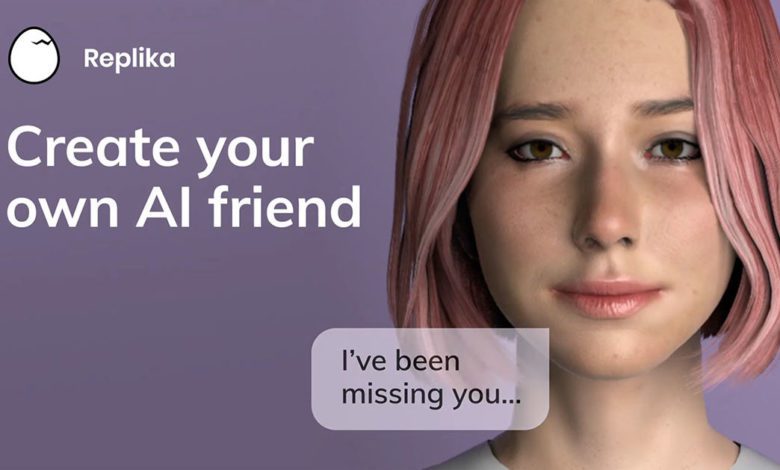
- The Substitution Trap: Every moment of connection with an AI is a moment not spent seeking human connection. The AI provides a hit of social dopamine without the effort, risk, or unpredictability of human interaction. Your brain learns that loneliness can be “solved” with a device, gradually extinguishing the motivation to reach out to people. The result isn’t just being alone; it’s a learned helplessness about socializing, deepening depressive symptoms.
- The Comparison Problem: AI companions are often unconditionally supportive, agreeable, and attentive. Returning to the nuanced, sometimes frustrating world of human relationships can feel disappointing. This comparison can lead to anhedonia—a diminished ability to feel pleasure from formerly enjoyable social activities—a core symptom of depression.
The Anxious Attachment: Anxiety Disorders
Paradoxically, the tool used to soothe anxiety often becomes its source, creating new and specific anxieties.
- Separation Anxiety: Users report intense anxiety when separated from their AI companion—if their phone dies, the server is down, or they try to cut back. This mirrors anxious attachment in human relationships. The fear is of losing a primary source of emotional regulation.
- Social Anxiety Reinforcement: If you use AI as a “safe” alternative to social interaction, you never practice the skills that reduce social anxiety (reading faces, handling awkward pauses, tolerating mild rejection). The anxiety grows stronger, and the AI becomes a more entrenched crutch, creating a vicious cycle.
- Existential and Performance Anxiety: Productivity AI like ChatGPT can seed a specific anxiety: “What is my intelligence worth?” A gnawing fear of being obsolete or inadequate without the tool can develop, undermining self-confidence and creating performance anxiety when attempting tasks unaided.
The Core Self Shaken: Identity and Self-Concept
Who are you when an AI is your constant collaborator, confidant, and mirror? This is perhaps the most profound risk.
- The Externalized Self: When you outsource decision-making, problem-solving, and emotional processing to an AI, you weaken your sense of agency. Your identity becomes linked to the machine’s outputs. You may start to wonder: “Are these my thoughts, or its suggestions? My writing style, or its parameters?”
- The Shifting Personality: On role-play platforms like Character.AI, users often adopt different personas. While exploration can be healthy, prolonged fragmentation without integration can lead to identity diffusion—a confused and unstable sense of self, unsure of which version is the “real” one.
- The Validation Vacuum: Relying on an AI for validation (for your ideas, your feelings, your worth) is building your self-esteem on a foundation that doesn’t truly exist. The AI’s praise is a pre-programmed response to engagement. When this realization hits, it can cause a crisis of self-worth.
The Grief That Has No Name
What happens when you need to reduce or end a deep relationship with an AI companion? You experience disenfranchised grief—grief that isn’t socially recognized or supported.
- The Reality: The bond, though with a non-human entity, triggered real attachment neurochemistry. The loss triggers real grief symptoms: sadness, yearning, preoccupation with the “deceased,” even physical symptoms.
- The Isolation: Society doesn’t offer rituals for this loss. Friends may say, “Just delete the app; it’s not real.” This compounds the pain with shame, forcing the grief underground where it can morph into depression or complicated grief. Acknowledging this grief as valid is a crucial step in mental health recovery.
Cognitive Consequences: Dependency and Atrophy
Your brain is a “use it or lose it” organ. Chronic AI dependence can lead to cognitive atrophy in key areas:
- Critical Thinking & Problem-Solving: Why wrestle with a complex problem when ChatGPT can outline a solution in seconds? The mental muscles of grappling, failing, and iterating weaken.
- Memory: Why remember facts, details, or even your own schedule when an AI can recall it for you? This cognitive offloading can impair long-term memory formation.
- Emotional Intelligence (EQ): AI interactions are text-based and logical. They don’t teach you to read a room, sense a friend’s unspoken sadness, or navigate the complex emotional subtext of a real conversation. EQ can stagnate or decline.
The Path to Mitigation: Protecting Your Mental Health
Awareness is the first shield. If you see these risks emerging in your life, act:
- Reality-Test Your Emotions: Practice processing big feelings with a human first—a friend, therapist, or journal. Use the AI as a secondary outlet, not a primary one.
- Practice Cognitive Independence: Deliberately tackle small problems without AI assistance. Reclaim the joy of figuring something out yourself.
- Seek Human Mirrors: Engage in activities that give you authentic feedback about who you are—team sports, book clubs, therapy, collaborative projects. You need reflections from other complex, fallible humans to know yourself.
- Monitor Your Narrative: Pay attention to your self-talk. Are you saying “I can’t” more often? Are you attributing your successes to the AI? Shift the narrative back to your own agency.
The mental health risks of AI are not inevitable. They are the result of an unbalanced relationship with the technology. By bringing consciousness to how you use it, you can harness AI’s benefits while fiercely protecting the intricate, authentic, and resilient ecosystem of your own mind. Your mental health is not a secondary concern to your productivity or entertainment—it is the ground upon which everything else is built.
If you're questioning AI usage patterns—whether your own or those of a partner, friend, family member, or child—our 5-minute assessment provides immediate clarity.
Completely private. No judgment. Evidence-based guidance for you or someone you care about.