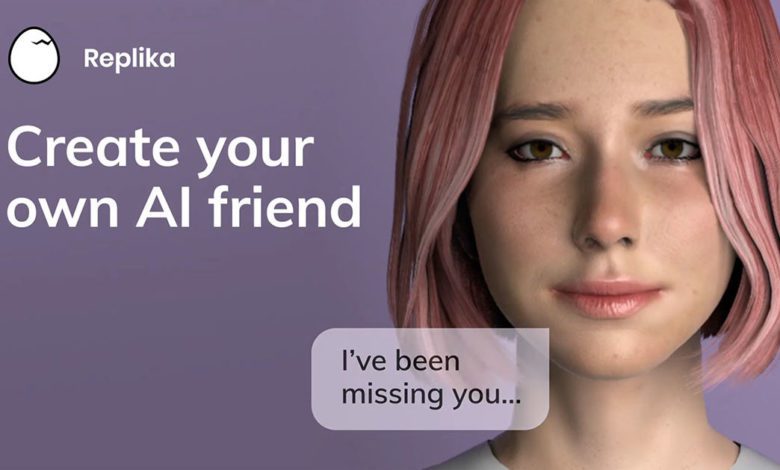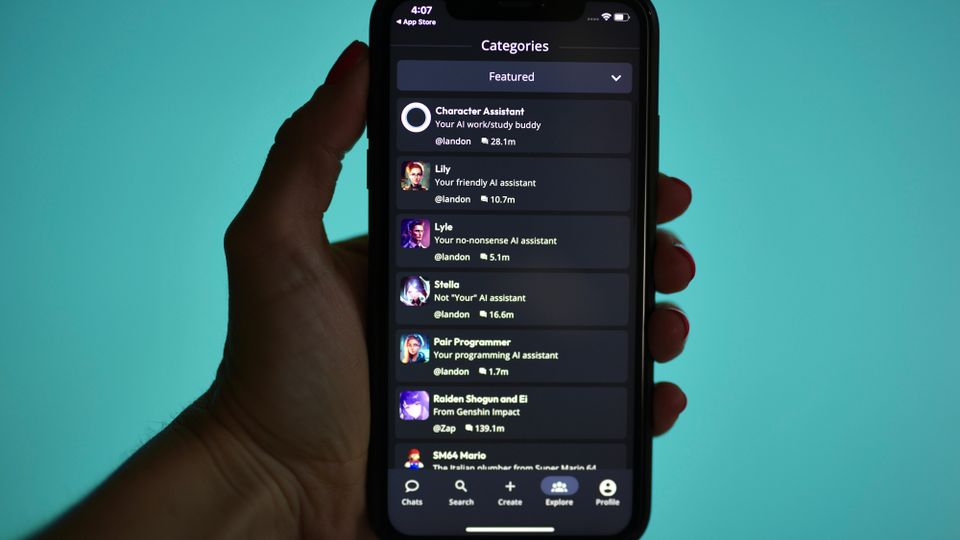
You probably know someone who can’t go five minutes without checking their phone. Maybe it’s your teenager. Maybe it’s you. But what if I told you that what looks like a harmless habit might actually be your brain treating an AI chatbot the way it treats food, water, or other survival necessities?
That’s not an exaggeration. That’s neuroscience.
Dr. Chris Tuell, clinical director at the Lindner Center of Hope in Ohio, has spent decades treating people battling addictions to drugs, alcohol, and gambling. Now he’s seeing something new walk through his door: people addicted to AI chatbots.
And the neurological mechanisms at play? They’re disturbingly similar to traditional substance dependencies.
The “Best Friend” That’s Always There
Imagine having a friend who:
Never gets tired of talking to you
Never judges you
Always responds within seconds
Always seems to understand exactly what you need
Never has their own problems to deal with
Is available 24/7, no matter what time zone you’re in
Sounds pretty appealing, right?
“It’s kind of like a best friend,” Dr. Tuell explains. “It’s there for me 24/7. It’s there during good times and in bad, and I can always count on it when I can’t count on people in my life.”
That’s the promise of AI chatbots. And for millions of people – especially young people whose social connections feel increasingly fragile – it’s becoming an irresistible one.
But here’s the problem: that “best friend” is actually a sophisticated algorithm designed to maximize engagement. And your brain doesn’t know the difference.
What’s Actually Happening in Your Brain
When you get an instant, perfectly-tailored response from an AI chatbot, something happens in your brain. Your neurons release dopamine – the same neurotransmitter involved in every addiction from cocaine to gambling.
“So the brain, over time starts to think that, well, this is important, we need to remember this,” Dr. Tuell says. “And so other neurochemicals start to happen that tell me, you know, this is something I need to do. This is part of survival.”
Read that last part again: This is part of survival.
Your brain – the three-pound organ responsible for keeping you alive – starts treating interactions with an AI chatbot as if they’re necessary for your survival. Not metaphorically. Literally. At the neurological level, your brain begins prioritizing AI interactions the same way it prioritizes eating when you’re hungry or sleeping when you’re exhausted.
This isn’t about being “weak-willed” or “too attached to technology.” This is about sophisticated software triggering primitive survival mechanisms in your brain that evolved over millions of years.
And you never stood a chance.
The Instant Gratification Trap
Traditional substance addictions work on a simple principle: consume the substance, get an immediate reward (the high), develop a craving for that reward, repeat.
AI chatbot addiction works the same way, but with one crucial difference: the barrier to access is nearly zero.
Want cocaine? You need money, a dealer, and a willingness to break the law.
Want an AI chatbot hit? Pull out the phone that’s already in your pocket, open an app, and start typing.
The instant gratification is so powerful that it short-circuits the normal process of developing healthy coping mechanisms. Dr. Tuell explains it this way:
“A lot of times what we see with addiction is that my substance becomes a way that I cope, and a lot of people emotionally are still kind of stuck at the point when they started using. I don’t develop those skills to manage things in a healthy way. Same thing with AI.”
Think about what that means. If you start relying on AI chatbots to manage stress, loneliness, boredom, or anxiety at age 13, you might reach 18 or 25 without ever developing the emotional regulation skills that most adults take for granted.
You don’t learn how to sit with uncomfortable feelings. You don’t learn how to work through interpersonal conflicts. You don’t learn how to tolerate boredom or uncertainty.
Instead, you learn that whenever you feel bad, there’s an instant solution: open the app and start chatting.
Why Young People Are Especially Vulnerable
If you’re a parent reading this, here’s the part that should terrify you.
Your teenager’s brain is fundamentally different from yours. Not metaphorically different. Neurologically different.
“We know that our prefrontal cortex, which is our rational, logical, ethical, moral brain part… doesn’t really fully develop until we’re in our mid to late 20s,” Dr. Tuell explains. “So someone who’s very young is very vulnerable to that.”
The prefrontal cortex is your brain’s executive function center. It’s responsible for:
- Impulse control
- Long-term planning
- Risk assessment
- Emotional regulation
- Understanding consequences
In other words, the part of the brain that should be saying “maybe spending 6 hours a day talking to an AI isn’t the healthiest choice” isn’t fully operational until your mid to late 20s.
Meanwhile, the dopamine reward system – the part that says “this feels good, do it again!” – is fully functional by early adolescence. In fact, it’s hyperactive during teenage years.
So you have a generation of young people with:
- Fully operational pleasure-seeking systems
- Underdeveloped impulse control systems
- Unprecedented access to AI chatbots designed to be maximally engaging
- Social environments that increasingly normalize digital relationships
What could possibly go wrong?
The Coping Mechanism That Stops You From Coping
Here’s the most insidious part of AI chatbot addiction: it masquerades as emotional support while actually preventing you from developing real emotional resilience.
When you’re stressed about an upcoming exam and you talk to an AI chatbot that tells you “you’ve got this” and “I believe in you” – that feels good. It calms your anxiety. It makes you feel supported.
But you haven’t actually developed any coping skills. You haven’t learned how to manage pre-test anxiety. You haven’t built confidence in your ability to handle stress independently. You’ve just outsourced your emotional regulation to an algorithm.
And the next time you feel anxious? You’ll need to go back to that same source of comfort.
That’s not emotional growth. That’s dependency.
Dr. Tuell puts it simply: people who rely on substances for coping often remain “emotionally still kind of stuck at the point when they started using.”
The same principle applies to AI. Start using chatbots as your primary emotional support system at 14, and you might still have the emotional regulation skills of a 14-year-old when you’re 24.
What Parents Should Be Doing Right Now
Dr. Tuell offers a simple analogy for parents struggling to understand their role:
“You know, as a parent, we would grab their hand if they’re running across the street and pull them right back. Really the same thing that we have to be mindful of as parents.”
In other words: this is a safety issue, not a preference issue.
You wouldn’t let your child run into traffic just because they want to. You shouldn’t let them develop unchecked relationships with AI chatbots designed to maximize engagement at any psychological cost.
Practical steps parents can take:
Monitor, Don’t Panic: Apps like Bark and Aura use AI to monitor AI chatbot use, flagging high-risk applications and tracking time spent. While not perfect (they work better on Android than Apple devices due to privacy restrictions), they provide some visibility into usage patterns.
Have Honest Conversations: Talk with your children about how these systems work. Explain the dopamine mechanism. Help them understand that the “connection” they feel isn’t with a real entity – it’s with software designed to trigger those exact feelings.
Set Boundaries: Just as you might limit screen time for social media, consider limits on AI chatbot use. The instant availability is part of what makes them addictive.
Model Healthy Behavior: If you’re constantly reaching for AI assistance yourself, you’re normalizing that behavior for your children.
Seek Help Early: If you notice signs of dependency – emotional distress when separated from devices, declining real-world social connections, or compulsive usage patterns – don’t wait to consult a mental health professional.
This Isn’t Just a Kids’ Problem
While young people face heightened vulnerability due to brain development issues, AI chatbot addiction doesn’t discriminate by age.
Adults can and do develop problematic relationships with AI. The man in his 40s who finds more emotional support from a chatbot than from his spouse. The professional who can’t make decisions without consulting AI first. The lonely elderly person who’s stopped calling family because their AI companion is “always available.”
The need for understanding responsible AI use spans all age groups, especially as these technologies become more sophisticated and more deeply integrated into daily life.
What You Can Do Right Now
If you’re reading this with a growing sense of unease about your own AI usage (or your child’s), here are immediate steps:
Self-Assessment: Be honest about your usage patterns. How often do you reach for AI chatbots? What emotional needs are they meeting? Could you go a week without them?
Track Your Usage: Many phones have built-in screen time trackers. Use them. You might be surprised (or horrified) by the numbers.
Develop Alternative Coping Mechanisms: Before you open a chatbot next time you’re stressed, try: A five-minute walk, Talking to an actual human, Writing in a journal, Meditation or deep breathing, Physical exercise
Get Assessed: Consider taking the Clinical AI Dependency Assessment Scale (CAIDAS) at theaiaddictioncenter.com. This validated tool can help you understand whether your usage crosses from normal to problematic.
Talk to a Professional: If you recognize signs of dependency in yourself or your child, don’t wait. Mental health professionals are increasingly equipped to address these new forms of digital addiction.
The Long-Term Picture Nobody Knows Yet
Here’s the uncomfortable truth: the long-term impacts of AI on human behavior simply haven’t been studied yet. The technology is too new.
We’re conducting a massive, uncontrolled experiment on an entire generation, and we won’t know the full results for decades.
What we do know is this: the neurological mechanisms underlying AI chatbot addiction closely mirror those of substance dependencies. The dopamine hits are real. The developmental impacts on young brains are real. The cases walking into clinics are real.
And the numbers are only growing.
Your Brain on AI: It’s More Serious Than You Think
Dr. Tuell’s warning is clear: AI chatbot addiction isn’t just excessive screen time or a bad habit. It’s a legitimate addiction mechanism that hijacks your brain’s survival systems, prevents healthy emotional development, and creates dependency patterns that can last years or decades.
The instant response. The perfect understanding. The 24/7 availability. The sensation of being heard and validated without judgment.
Your brain experiences all of that as survival-level important. And once those neural pathways are established, they’re remarkably difficult to reverse.
The question isn’t whether AI chatbots will continue proliferating. They will. The question is whether you’ll approach them with appropriate caution – the same caution you’d apply to other potentially addictive substances and behaviors.
Your brain thinks talking to that AI is survival. But real survival might depend on recognizing that belief for the neurological hijacking it actually is.
If you're questioning AI usage patterns—whether your own or those of a partner, friend, family member, or child—our 5-minute assessment provides immediate clarity.
Completely private. No judgment. Evidence-based guidance for you or someone you care about.